Emotional intelligence and performance: build both
Performance is not only the result achieved. It also depends on the quality of the relationships that allow people to decide, learn and stay steady under pressure, at work and beyond. Emotional intelligence offers a practical lens for action.
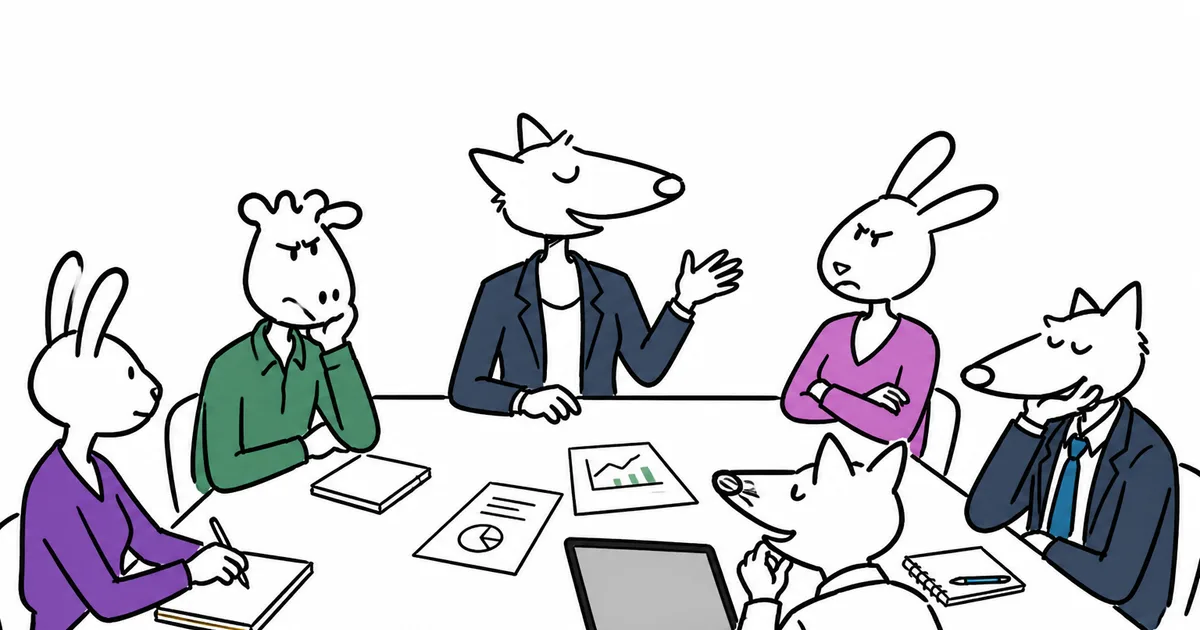
Losing or building performance can sometimes play out in a very ordinary scene: an expected result has not materialised, and the meeting that follows becomes tense within minutes. Each person defends their area, facts become mixed with emotions, and the team leaves with little clarity and less energy. The issue is not only the result; it is the quality of the relationship that allows people to recover, or prevents them from doing so. This article offers a practical reading of performance through emotional intelligence, useful at work, at home and in sport.
Emotional intelligence and performance: do not reduce performance to results
Results matter. They provide direction, make effort visible and help people decide. In our view, however, a result becomes fragile when it is obtained at the cost of trust, cooperation or clear thinking.
Amy Edmondson’s work at Harvard Business School has strongly established psychological safety in the management debate. In The Fearless Organization, she shows that high-performing teams do not make fewer mistakes; they report them more, which allows them to learn faster. With Michaela Bransby, in a synthesis published in 2023, she also recalls a central point: psychological safety must go together with a high level of standards, otherwise it becomes a comfort zone rather than a performance zone.
- Result: what is achieved, delivered or improved.
- Relationship: the way people cooperate to achieve it.
- Energy: the ability to sustain effort without becoming disorganised.
- Learning: what the experience allows people to correct next time.
This framework is useful because it avoids confusing performance with pressure. It helps you look at what produces the result, and at what makes people willing and able to try again.
Psychological safety connects high standards and relationship quality
In a team, a family or a sports squad, the relationship is not a pleasant extra. It shapes the flow of information, the speed at which tensions are resolved and the real level of commitment. When the relationship deteriorates, people protect themselves more and learn less.
The meta-analysis by Marisa Frazier and her co-authors, published in Personnel Psychology in 2017, covers 136 samples, more than 22,000 people and nearly 5,000 teams. It establishes a link between psychological safety, performance, learning and engagement. Google’s Project Aristotle, widely shared with leaders although not published in a scientific journal, also popularised the idea that psychological safety plays a major role in team effectiveness.
You can see this in everyday situations. A poorly handled disagreement becomes a hidden conflict. Vague feedback creates frustration. A decision imposed without listening may produce minimum compliance rather than real ownership.
Performance is measured by what people achieve, but also by the quality of the relationships that allow them to get there.
This does not mean avoiding high standards. It means that high standards work better when they rely on a relationship safe enough to tell the truth, recognise mistakes and decide quickly.
Build performance through emotional intelligence
Emotional intelligence does not mean being nice in every circumstance. It is the ability to notice your internal state, understand what it triggers in yourself and others, and then choose an appropriate response. It is a decision-making skill as much as a relational skill.
In a tense meeting, the first reflex may be to justify yourself, attack or withdraw. A more precise emotional reading helps identify fear of losing face, irritation, fatigue or a need for recognition. This awareness does not solve everything, but it prevents you from adding noise to the problem.
The work of Kim Cameron, Wayne Baker, Jane Dutton and Emily Heaphy at the University of Michigan provides useful vocabulary here. They describe the importance of high-quality connections, relational energy and mutual help in performance. In the same spirit, Rob Cross stresses that high performers are not necessarily the most connected people, but those who know how to maintain useful, focused and energising networks.
- Self-awareness: identifying your triggers before they dictate your reaction.
- Emotional mastery: remaining able to choose your behaviour under pressure.
- Reading others: noticing weak signals, expectations and resistance.
- Responsibility: focusing on your possible response rather than on blame.
These capabilities are not reserved for senior leaders. They help a parent set a boundary, an athlete recover after a mistake or a manager lead a difficult conversation.
Listed companies already make this double requirement visible
In universal registration documents published in France and in proxy statements published by listed companies in other markets, executive variable pay may combine financial and non-financial criteria. Depending on the company, these criteria may relate to economic performance, safety, employee engagement, customer experience, social responsibility or management quality.
These documents should not be read as proof that every organisation already knows how to build strong relationships. They show something more specific: relationships become a governance issue when they influence value creation, business continuity and stakeholder trust.
Anglo-Saxon management culture often makes this link more explicit in its performance frameworks: the “what” and the “how”, what has been achieved and how it has been achieved. This distinction is useful beyond the corporate world, because it forces us to look at the human consequences of success.
Performance is pursued at work, in private life and in sport
Reducing performance to the world of work would be too narrow. In a family, “succeeding” in an important conversation does not only mean getting your way; it also means preserving the possibility of speaking again. In sport, winning a match is not always enough if the team loses cohesion or if the athlete moves out of their learning zone for too long.
Emotional intelligence helps distinguish intensity from overflow. Intensity puts energy in the service of a goal. Overflow takes control of the decision. You can hear the difference in tone, see it in timing and notice it in the ability to return to calm.
Robert Waldinger and Marc Schulz, in The Good Life, draw on the Harvard Study of Adult Development, a longitudinal study launched at Harvard in the late 1930s. It follows participants and, over time, their relatives, combining interviews, questionnaires and health data. This research is not about workplace performance, but it recalls that the quality of relationships weighs heavily on health and well-being. In our view, the link is direct: sustainable human performance also depends on the quality of the relationships that support it.
In our coaching and training experience, the most solid progress appears when people work on very concrete situations. They do not only learn a concept; they test another way of responding under pressure, then observe the effect on the result and on the relationship.
How to improve performance without damaging it?
A useful approach is to define performance as a living balance. The aim is not to oppose high standards and care, but to make them work together. High standards clarify the direction; relational quality makes adjustment possible.
This connection is echoed in several streams of research. Jody Hoffer Gittell, through the theory of relational coordination, links operational performance, shared goals, shared knowledge and mutual respect. Christine Porath has documented the effects of incivility on effort, creativity and retention, while Ozcelik and Barsade have shown that workplace loneliness reduces performance, partly because isolated employees appear less approachable and engage less.
The managerial relationship also plays a direct role. Gallup, through the work of Jim Harter and Jim Clifton, estimates that the relationship with the manager explains around 70% of the variance in team engagement. The meta-analysis by Martin et al., published in Personnel Psychology in 2016, points in the same direction on the link between the quality of the manager-employee relationship and performance.
This requires measuring more than immediate satisfaction. In the Power 21 approach, objectives and indicators are defined with the client before the programme, then followed over time through behaviours that are actually practised. The aim is to identify what changes in habits, conversations and cooperation.
- Clarify: state the expected result and the expected behaviour.
- Observe: identify the situations where pressure damages the relationship.
- Practise: choose one simple micro-action and repeat it in the field.
- Share: bring together successes, difficulties and lessons learned.
- Adjust: decide the next step from observed facts, not only from impressions.
This method respects a simple reality: if you do not use it, you lose it. Spaced repetition, peer learning and feedback from real situations help turn an intention into observable behaviour.
Where should you start with emotional intelligence and performance?
It is often more effective to choose one recurring situation where the result and the relationship become tense at the same time: a decision meeting, feedback conversation, conflict, family negotiation, sports preparation or moment of pressure.
- Name the issue: what result do you want to obtain, concretely?
- Describe the relationships: who needs to cooperate, speak or trust each other to get there?
- Identify the emotions at play: what fear, anger, impatience or fatigue is influencing the decision?
- Choose a response: what simple behaviour could increase clarity without damaging the relationship?
- Observe the effect: what has changed in the result, the dialogue or the energy available?
If you want to embed this double reading in your teams, Power 21 can help you structure leadership, management and coaching programmes. You can also explore how we connect learning, indicators and real-world practice through our approach to monitoring results and measuring impact.